

Private Health Check UK Cost: Why Prices Range From £179 to £14,000
Private health screening pricing is one of the most inconsistent landscapes in British medicine. Two providers can both sell a “comprehensive health check up.” Yet one charges under £200 while the other charges significantly more. Both reflect their respective service scopes. Rather, they simply sell different things under the same name. Indeed, almost nothing in the marketing makes that obvious. However, once you lay the four real tiers side by side, the apparent chaos resolves into logic.
In this article
- Four genuine price tiers exist in this sector, separated chiefly by whether imaging is involved and how many specialists review your results.
- Same-day results and a ten-day report are not two speeds of the same process. They are different processes, and the difference is clinically meaningful, not just administrative.
- The biggest single driver of cost is not the provider’s name above the door. It is whether a radiologist must manually read imaging, and how many specialists are involved in interpreting what is found.
- A higher price does not automatically suit you specifically. The right tier depends on your age, family history, and what you are actually trying to learn.

Why private medical assessment cost varies so drastically
The illusion of one market
Search for a private health check up and the results will not read like one market with a price spread. Instead, they read like four separate markets that happen to share a search term. Indeed, providers do not really compete on price within a shared format. Rather, they sell structurally different products and rely on the same vocabulary: “comprehensive,” “full body,” “executive.”
What actually drives the cost
A blood panel is, in cost terms, almost free to scale. Samples go to a laboratory. Then an automated analyser does most of the work. Subsequently, a clinician reviews the numbers against known reference ranges. An MRI scan, however, works differently. Because every image requires a consultant radiologist to read it manually, costs rise. That single difference, automated analysis versus expert human interpretation, ultimately explains most of the private health check UK cost spread in this sector.
Private health screening pricing: the four tiers, in full
Detailed breakdown of private health check up by tier
Below is what each tier actually buys, drawn from published pricing and package details across the UK private screening market.
Tier one · Entry-level
£179–£495
At this level you pay for blood analysis and a short physical assessment, not imaging. The lowest packages start from around £179. Specifically, they cover roughly 24 blood readings and seven non-blood tests. These include an ECG heart rhythm check and a lung function screen for COPD. The appointment, meanwhile, lasts about 30 minutes. Stepping up to around £495, however, adds a doctor’s physical examination. Neither level includes any internal imaging. Instead, you receive a snapshot of your blood chemistry, cardiovascular rhythm, and basic physical indicators. Results, finally, arrive typically within about eight days.
Suits someone who wants a baseline reading without committing to a longer process. It will tell you whether your cholesterol, kidney function, liver function, and blood sugar sit within expected ranges. What it cannot tell you is what is happening inside your organs.
Tier two · Standard
£999–£5,500
This is where blood-only screening starts giving way to targeted imaging. Indeed, it is the widest tier in this sector, both in price and in scope. Packages around £999 introduce lung imaging, bone density scanning, and hormone profiling. These come with an expanded blood panel and often a year of ongoing clinic access. Stepping up to around £2,950, by contrast, moves into full-body MRI territory. Here, you get more than 120 blood markers. Genetic cancer marker testing is also included. At the upper edge, packages around £5,500 offer a four-hour appointment. Full-body MRI, in this case, covers the brain, abdominal organs, and pelvis. You receive roughly 50 separate blood tests. Finally, a same-day or near-term consultation is included.
Note this tier spans a £4,500 gap. A “standard” package at £999 and one at £5,500 share almost nothing beyond a basic blood panel. Always check whether imaging is included before comparing two packages by price alone.
Tier three · Comprehensive
£8,500–£10,400
Appointments stretch across most of a day. Indeed, imaging becomes the centrepiece rather than an add-on. Packages around £8,700 run for seven hours. Specifically, they combine full-body MRI with detailed consultations, physical examinations, and an extensive testing programme. The most thorough packages, around £10,400, by contrast, extend to roughly nine hours. These add body composition analysis, cardiology testing, and approximately 55 blood tests. An alternative line around £8,500, meanwhile, centres on full-body MRI. This covers the brain, heart, abdomen, and pelvis. Carotid and abdominal ultrasound also supplement this imaging. An exercise stress echocardiogram, in addition, runs as part of the assessment. A full pathology panel covers biochemistry, haematology, and inflammatory markers. Finally, a radiologist leads a same-day consultation and virtual tour of the MRI images.
What separates this tier from Standard is not just more imaging. It is more time spent interpreting it with you. A radiologist walking you through your own scans takes considerably longer than handing you a printed report.
Tier four · Executive
£11,500–£14,000
At the top of the UK market, packages around £14,000 include CT coronary angiography and CT virtual colonoscopy. Full MRI imaging also covers the brain and pelvis. A senior doctor, in addition, reviews findings in a final consultation. This consultation covers every test you completed. Packages around £12,500, meanwhile, add a dedicated biparametric prostate MRI. They include a wider panel of advanced lipid markers. These sit on top of already extensive inclusions. An equivalent standard version, by contrast, costs around £11,500.
These are not simply more expensive versions of Comprehensive. They typically add entirely new imaging modalities, such as CT angiography or virtual colonoscopy, that the tier below does not include at all.
At a glance
| Tier | Price | Duration |
|---|---|---|
| Entry-level | £179–£495 | 30–45 min |
| Standard | £999–£5,500 | 1–4 hrs |
| Comprehensive | £8,500–£10,400 | 4–9 hrs |
| Executive | £11,500–£14,000 | Full day |
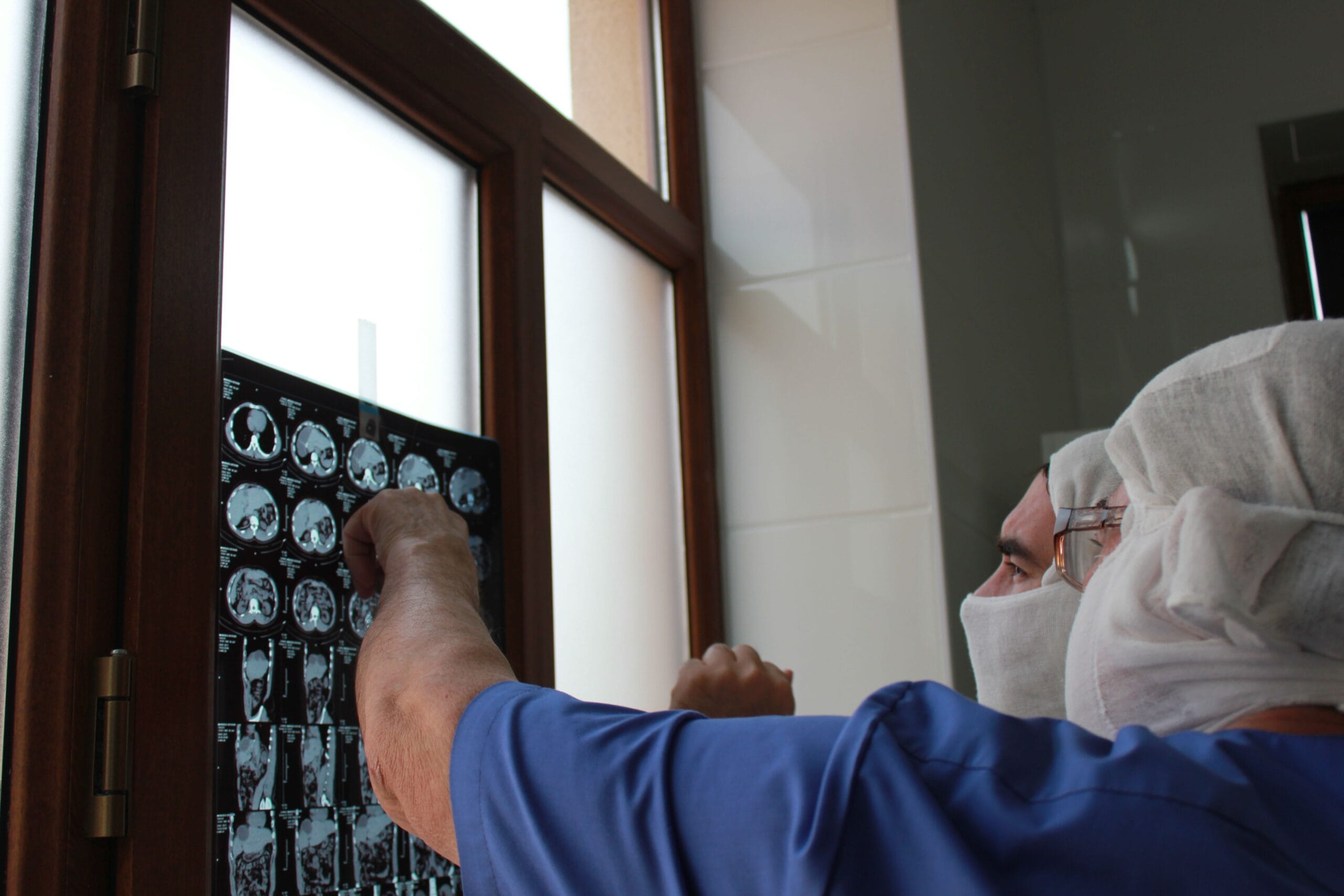
Same day results versus a ten day report
One detail trips up almost everyone comparing providers in this sector: turnaround time. Some clinics promise results the same day. Others, however, state plainly that the full report will take up to ten working days. These are not, in fact, two speeds of the same process. Rather, they are two different processes. Consequently, conflating them is the easiest way to misjudge what you are paying for.
What same-day results actually mean
A same-day result typically means an on-site or rapid-turnaround laboratory processes blood samples. Then a doctor talks you through the numbers before you leave. For standard blood chemistry with quantitative results against well-established reference ranges, this works well. But where a package includes MRI or CT imaging, “same-day” usually means a verbal walkthrough of the images with a radiologist immediately after your scan. Consequently, it does not mean a finalised written report. Rather, the report would cross-reference every result against your full history.
The hidden difference between fast and thorough
This deserves pausing on. “Same-day results” is one of the more persuasive phrases in this sector. Yet it does not always mean what it implies. A verbal summary delivered within hours of a scan is, by definition, a first read. Consequently, the radiologist has not cross-checked it against your blood results. Nor has your medical history been reviewed. No second specialist opinion has been obtained, either. Therefore, if a finding is borderline, the radiologist has very little room to look again. You leave the building that day. A ten working day turnaround, by contrast, generally reflects more checking. Between your appointment and report delivery, in other words, the report improves. This is not slower service.
Ask any provider directly whether “same-day results” means a final clinical report. Or does it mean a preliminary summary instead? You may, after all, revise the summary once a radiologist reviews the imaging more closely. That distinction rarely appears in marketing copy. Yet it materially affects your confidence. How much, ultimately, can you trust what you hear on the day?
Why the same three protocols produce such different experiences
Every tier in this sector builds from the same three components: blood testing, physical examination, and imaging. What changes between a £300 package and a £10,000 one is not the presence of these components but their depth. Crucially, how much expert time goes into interpreting them varies enormously.
Blood testing at entry level might cover 20 to 24 markers. At executive level, by contrast, panels extend past 100. These include advanced lipid subfractions and inflammatory indicators. Standard packages rarely test these markers. Consequently, more markers mean more laboratory processing. Furthermore, the result set becomes more complex. This is why, ultimately, higher tiers take longer to deliver a final report.
How diagnostic precision impacts private health assessment fees
Imaging is where the gap widens most sharply. A standard NHS-style health check up, for instance, focuses on cardiovascular risk factors. Blood pressure, cholesterol, and lifestyle questions drive the assessment. Notably, it includes no imaging. The NHS offers this check free every five years to adults aged 40 to 74 in England. The appointment takes around 30 minutes. This is, therefore, the natural starting comparison for anyone weighing up whether private is worth paying for. If your goal is simply a cardiovascular risk snapshot and you fall within the eligible age range, the free NHS check covers similar ground to the lowest private tier.
Private programmes earn their cost by going further. Specifically, you get a wider blood panel. Alternatively, you get imaging. Or you get both. Imaging, in particular, is structurally different work. Because a radiologist must examine hundreds of cross-sectional images individually, costs climb further. Indeed, blood tests alone cannot reveal the abnormalities that imaging can detect.
This manual review is the single biggest cost driver between tiers. A blood panel gets processed largely by automated laboratory equipment. An MRI scan, however, cannot interpret itself. Consequently, every additional body region you scan adds meaningful radiologist time. Likewise, every additional specialist brought in to review findings adds further cost. Together, they add cost on top of that.
What drives up costs as the level of care increases
Four things expand in parallel
As price rises across this sector, four things expand in parallel. Specifically, the number of blood markers tested increases. Similarly, the range of body regions imaged widens. In addition, more specialists get involved. Their involvement in reviewing your results, consequently, grows. Time spent explaining those results back to you in person grows too.
The clinical case for early detection
Early detection is the underlying rationale for most of this spending. Clinical evidence behind it is genuinely strong. Cancer Research UK’s analysis shows that for lung cancer, more than six in ten people survive five years or more when diagnosed at the earliest stage, compared with fewer than one in ten when diagnosed at the most advanced stage. Imaging-led packages are designed to close that gap. They catch structural abnormalities long before symptoms would prompt a GP referral.
But a higher price does not suit everyone
A higher price tag does not automatically suit everyone. A 35-year-old with no family history and no specific concerns, for example, may get genuine value from a £495 blood and physical screening every couple of years. Someone with a family history of cardiovascular disease, however, is in a different position. Likewise, someone who has never had imaging despite being in a higher-risk age bracket is in a different position still. For them, a £300 package will not tell them what they actually need to know.
How to interpret clinical pricing without being misled
Question one: Is imaging included?
Does the programme include imaging? If so, which body regions specifically? “Full body” is, in fact, used loosely across the industry. It can mean brain and abdomen only. Alternatively, it can also mean a comprehensive scan spanning the entire torso, pelvis, and major vessels. Always ask.
Question two: Who reviews the imaging?
Who reviews the imaging? Do you discuss them directly? Or do I only receive a written summary afterwards instead? A radiologist walking you through your own scans in real time is, in particular, a materially different experience. By contrast, a generic letter stating “no significant findings” is different entirely.
Question three: What happens if something is found?
What happens if something is found? Some programmes include a clear pathway to specialist referral. This is standard. Others, however, leave you to arrange this yourself. Consequently, you leave the building with a report in hand. This single detail, ultimately, makes the difference. A check-up either ends in clarity. Or it ends with more questions than you started with.
For a closer look at what comprehensive screening typically covers component by component, our article on what a full body MOT actually includes breaks down each test category in detail.
Beyond the single day scan: Why comprehensive assessments excel
White coat hypertension and physiological state
The most comprehensive packages are built around a single appointment. However many hours it runs for, the format has a real ceiling. This limit, importantly, has nothing to do with clinician skill. Rather, it has to do with physiology. The evidence for this is well established. Clinicians, for instance, have long recognised what is formally known as white coat hypertension. Blood pressure measured in a medical setting runs higher than it does in calmer conditions. This is a genuine physiological response. Simple nerves, in fact, do not cause it. Consequently, doctors are trained to account for it before treating a single high reading as definitive.
No opportunity to repeat borderline readings
A single day assessment has no structural way around this. Every test is performed at whatever physiological state you happen to be in that morning. You may have slept badly, arrived stressed from travelling, or even skipped breakfast to fast for bloods. Consequently, there is no second visit to repeat a borderline reading in calmer conditions. Simply put, there is no second day.
Constraints on specialist time
A single day also compresses specialist time. Even where a programme brings in several consultants, each has a narrow window. They review your case in that window. Often, they work from the same set of results rather than building on each other’s findings. The day unfolds, yet they don’t build together. Consequently, a borderline result discovered late in the appointment leaves little room. You have no time for a second test. Nor do you have time for a follow-up conversation before you leave.
One day screening is not a poor choice. For most people, most of the time, it remains a perfectly reasonable way to get a picture of current health. But you should be honest about what the format trades. Specifically, it trades speed. It also trades convenience. A multi-day model, by contrast, spreads testing out. Results from one day, consequently, inform what gets investigated more closely on the next. It is, in short, tailored specifically to avoid these limitations.
Frequently asked questions
understanding the basics
How much does a private health check cost in the UK? +
Private health check UK cost ranges from approximately £179 for an entry-level blood and physical screening to £14,000 for the most comprehensive executive assessment, including full-body MRI and CT imaging. Most people land somewhere in the £1,000 to £3,000 range, depending on whether imaging is included and how many blood markers are tested.
Why do prices vary so much between providers? +
Price tracks scope rather than brand. Packages without imaging cost less because blood analysis is processed largely through automated laboratory equipment. The ones that include MRI or CT scanning cost considerably more because a radiologist must manually review every image, and additional specialists are often needed to interpret findings across different body systems.
What is included in a basic private health check? +
Private health check UK cost for a basic package typically includes a blood panel covering 20 to 24 markers, such as cholesterol, kidney function, liver function, and blood sugar, alongside an ECG heart rhythm check and a short physical examination. It does not usually include any internal imaging such as MRI or CT scanning.
How does a private health check compare with the NHS Health Check? +
The NHS Health Check is a free, 20 to 30 minute appointment offered every five years to adults aged 40 to 74 in England, focused specifically on cardiovascular risk factors including blood pressure, cholesterol, and lifestyle questions. It does not include imaging or the wider blood panels found in private packages. If you are simply weighing up cardiovascular risk and fall within the eligible age range, the free NHS check covers similar ground to the lowest private tier. Private health checks earn their cost by going further, whether through a broader blood panel, full imaging, or both.
choosing the right level
Is same-day results better than waiting ten days? +
Not necessarily. Same-day results often refer to a verbal summary of blood work or a walkthrough of imaging immediately after your appointment, rather than a finalised written report. A ten working day turnaround usually means a radiologist has reviewed every image in detail and a senior clinician has cross-referenced findings across all your results before compiling a single comprehensive report. Faster is not automatically more thorough.
Do I need imaging in my health check, or is blood testing enough? +
Blood testing identifies issues that show up chemically, such as raised cholesterol or impaired kidney function. It cannot detect structural abnormalities, such as a tumour or a narrowed artery, which require imaging like MRI or CT to identify. Whether you need imaging depends on your age, family history, and personal risk factors. Someone with no family history and no specific concerns may find blood and physical screening sufficient. Anyone with risk factors for cardiovascular disease or cancer is likely to benefit from imaging-led packages.
What does “full body” actually mean across different providers? +
The term is used inconsistently across the industry. Some providers, for instance, use “full body” to describe imaging covering the brain, abdomen, and pelvis only. Others, however, use the same term for a much broader scan including the spine, major blood vessels, and additional organ systems. Always ask any provider exactly which body regions are scanned before assuming two “full body” packages are equivalent.
Why do some packages cost thousands more for what looks like similar testing? +
Packages that look similar on the surface, such as two “comprehensive” assessments, can differ significantly in how many specialists review your results, how much time is spent explaining findings in person, and whether follow-up referral pathways are built into the price. A package that includes a radiologist walking you through your own MRI images and a senior consultant reviewing your full report will typically cost more than one offering a generic written summary, even if the underlying tests sound similar on paper.
How often should I get a private health check? +
There is no single answer that applies to everyone. Many providers suggest an annual or biennial blood and physical screening for general monitoring, with imaging-led comprehensive assessments repeated less frequently, often every two to three years, unless a specific finding or family history warrants closer monitoring. Your GP or the clinician reviewing your results is best placed to recommend a sensible interval based on what your specific results show.
Can a private health check replace seeing my GP? +
No. A private health check is a screening tool designed to identify risk factors and early signs of disease before symptoms appear. It does not replace ongoing GP care, prescription management, or treatment for existing conditions. If a private health check identifies a concern, the appropriate next step is usually referral to a specialist or discussion with your GP, not self-managed treatment based on the report alone.
You now understand why the UK market works this way. See what’s possible when those constraints don’t exist.






2 Responses
Detailed and explained very well.
Thank you again for taking the time to leave a comment on our blog post, “Private Health Check UK Cost” We’re pleased to read that you found the article detailed and clearly explained.