Breast cancer is the most common cancer in the UK, and rates are rising. More worrying still, a growing share of cases are in women under 50, who are too young to be invited for routine screening.
Below, this guide explains why rising breast cancer rates matter, what is behind the increase in younger women, what raises your risk and the signs to check for at any age.
Are breast cancer rates rising?
Yes. In the UK, doctors diagnose around 59,400 cases of invasive breast cancer each year, and around 11,200 die from it. Globally, the picture is similar.
In 2025, the World Health Organization's cancer agency, IARC, estimated that 1 in 20 women worldwide will develop breast cancer in their lifetime. By 2050, it projects 3.2 million new cases and 1.1 million deaths a year. That is a rise of 38% in cases and 68% in deaths.
The good news is that doctors now find most breast cancers in England at an early stage, when treatment works best. As a result, around three in four women survive for ten years or more.
Why breast cancer rates are rising in women under 50
In June 2026, the charity CoppaFeel! published an analysis of the latest figures. It found that cases among women aged 25 to 49 rose by 5% in a single year, between 2022 and 2023.
- Diagnoses in women under 30 rose by 78% between 2001 and 2019
- One in six diagnoses is in someone aged 49 or under
- Women under 50 are almost twice as likely to be diagnosed late as women in their 60s
- The charity says health professionals too often dismiss symptoms in younger women
Researchers are still working out why. However, experts point to changes in how women live, such as having children later or not at all, alongside alcohol, weight and activity levels. In addition, better awareness may mean doctors find more cancers.
What raises your risk
Cancer Research UK estimates that around 23% of breast cancers are preventable. However, while you can change some risk factors, others you cannot.
Fixed
- Getting older
- A family history of breast or ovarian cancer
- An inherited gene change, such as BRCA1 or BRCA2
- Dense breast tissue
Lifestyle
- Drinking alcohol
- Being overweight after the menopause
- Low levels of physical activity
- Some types of HRT, a small increase
Why screening starts at 50
The NHS invites women for a mammogram every three years from 50 up to their 71st birthday. The NHS does not routinely screen younger women, because breast tissue is usually denser before the menopause, which makes mammograms harder to read.
Instead, women under 50 with a strong family history can ask their GP about a referral for earlier checks. CoppaFeel! is also calling for a short risk assessment, based on family history, genes and breast density, so that women at higher risk are found sooner. Our guide to the well woman health check covers the other screening women are offered.
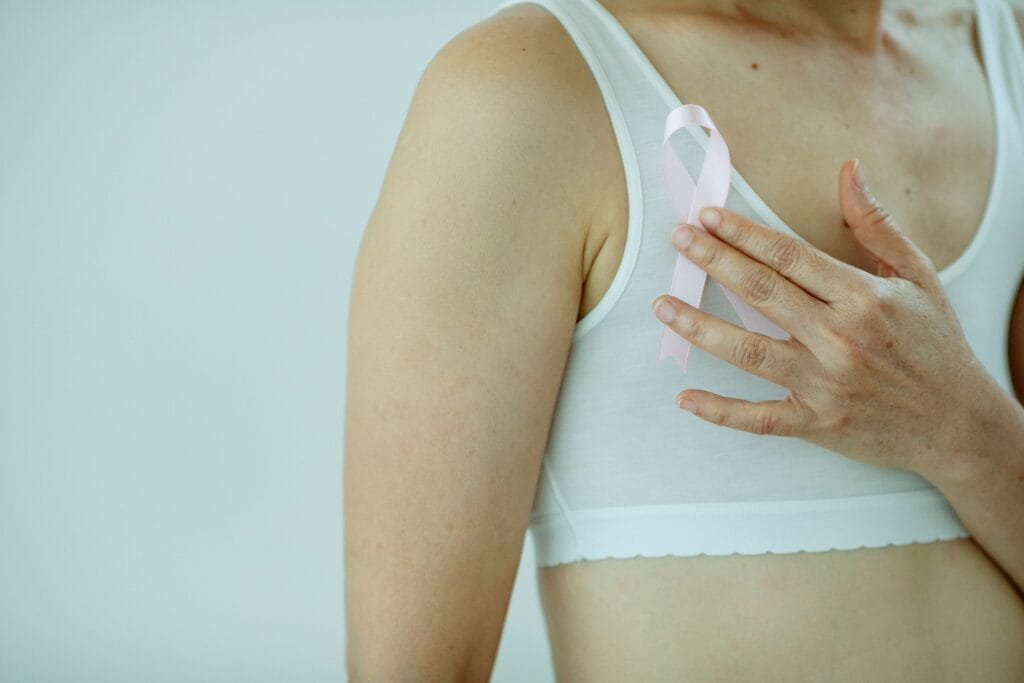
Signs to check for
Get to know how your breasts normally look and feel. Then, if you notice any of these changes, see your GP promptly, whatever your age.
- A new lump or thickening in a breast or armpit
- A change in the size or shape of a breast
- Dimpling or puckering of the skin
- A change in the nipple, such as turning inwards
- Discharge or bleeding from the nipple
- A rash or crusting on or around the nipple
Questions women ask
Is breast cancer increasing in the UK?
Yes. The UK sees around 59,400 new cases each year, and rates in women under 50 rose by 5% between 2022 and 2023, according to CoppaFeel!.
Why is breast cancer rising in young women?
The full reasons are not yet clear. Even so, having children later, alcohol, weight and activity levels may all play a part, alongside better awareness.
At what age does breast screening start in the UK?
The NHS invites women from 50 up to their 71st birthday, every three years. After that, you can still ask for a mammogram every three years.
Can I have a mammogram under 50?
Yes, through your GP if you have symptoms or a strong family history. Otherwise, some private health checks include one.
Is breast pain a sign of cancer?
Breast pain on its own is rarely a sign of breast cancer. Nevertheless, see your GP if it does not go away or comes with other changes.
Can breast cancer be prevented?
Not always. However, Cancer Research UK estimates that around 23% of cases are preventable, mainly by drinking less, keeping a healthy weight and staying active.
A more thorough option
Our assessments in Ahmedabad, India, include a digital mammogram and breast cancer markers, with every result explained in person by the specialists who review them. For example, see what our Gold Health Assessment includes.
All Health AssessmentsSources: Cancer Research UK, breast cancer statistics. IARC, 2025. ITV News, CoppaFeel! analysis, June 2026. NHS guidance on breast screening and breast cancer symptoms.