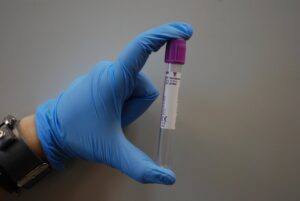
Some people with persistent heartburn could soon be offered a quick “sponge on a string” test on the NHS, instead of waiting for an endoscopy (a camera passed down the throat). On 16 November 2026, the National Institute for Health and Care Excellence (NICE), which decides which tests and treatments the NHS in England should offer, published draft guidance backing the test. Here is what it involves, who could be offered it, how accurate it is and what you can do now.
The test looks for Barrett’s oesophagus, a change in the lining of the food pipe that is usually caused by years of acid reflux. Barrett’s is not cancer, and most people who have it never develop cancer, but it does raise the risk. The test can also pick up early oesophageal cancer.
The short answer
About 7 minutes
Time the sponge spends in your stomach before it is drawn back up
1 to 2 in 100
Adults thought to have Barrett’s oesophagus
February 2027
When NICE’s final guidance for England is expected
£850
One UK clinic’s published self-pay price for the test and report
Guidance and prices checked 16 November 2026.
What is the capsule sponge test?
The capsule sponge test, also called the sponge on a string or pill on a thread, collects cells from the lining of your oesophagus (food pipe) without a camera or sedation. It is usually carried out by a nurse, and can be done in a GP surgery or community clinic rather than a hospital.

You swallow a capsule
A small capsule on a thin thread is swallowed with water. Inside is a compressed sponge.
The sponge is released
The capsule dissolves in your stomach and the sponge expands.
It is drawn back up
After about seven minutes, the nurse gently pulls the thread, and the sponge collects cells on its way up.
Cells go to a laboratory
The sample is checked for changes linked to Barrett’s oesophagus and early cancer.
Most people can return to normal activities straight away. Your provider will tell you how to prepare. One private clinic, for example, asks patients to fast for a short time and pause certain medicines beforehand.
What NICE has recommended
NICE’s draft guidance covers two capsule sponge tests for use in the NHS in England. It recommends offering a test to people with persistent gastro-oesophageal reflux disease (GORD, known as GERD in the US) who also have other risk factors for Barrett’s oesophagus and oesophageal cancer, who do not need to be sent urgently to hospital with suspected cancer. The test would be used instead of a first endoscopy, to identify who needs further investigation. It could also give people already diagnosed with Barrett’s oesophagus another way to be monitored. NICE’s committee also found that patients prefer the sponge test to an endoscopy.
The tests do not need sedation and can be carried out in GP practices and community diagnostic centres rather than in hospital. Once final guidance is published, the NHS should fund the test and make it available to eligible patients across England, so access will no longer depend on where you live.
- The guidance is a draft. Comments are open until 7 December 2026, and the NICE committee meets again on 16 December 2026.
- Final guidance is expected in February 2027.
- The test is already offered in some parts of England through NHS pilots, and is available nationally in Scotland and Wales.
- Endoscopy is in high demand, so some people with Barrett’s oesophagus are not checked as often as recommended. A simpler test could help.
NICE chief executive Professor Jonathan Benger said oesophageal cancer “is very difficult to treat when it is diagnosed at a later stage”.
Who could be offered it?
The draft guidance is aimed at people with persistent reflux plus other risk factors, not everyone with occasional heartburn. Each of these raises the risk of Barrett’s oesophagus, for men and women alike. The more that apply to you alongside long-term reflux, the more likely a test is to be offered.
- People aged 50 or over
- Men
- People of white ethnicity
- People living with obesity
- Smokers
- A close relative with Barrett’s or oesophageal cancer
The risk also rises the longer you have had reflux, and reflux that wakes you at night or a hiatus hernia raise it further.
Who should not have the test
The test is not suitable for everyone. According to NICE, this includes people with swallowing difficulties, pregnant women, people with enlarged veins in the oesophagus (varices), people on blood-thinning medicines that cannot be paused, and people who have had previous endoscopic treatment of the oesophagus, among others.
How accurate is the test?
No test, including endoscopy, finds every case. Cancer Research UK notes that up to 1 in 10 cases of Barrett’s oesophagus can be missed even when the capsule is swallowed properly, and up to 15% of people cannot complete the swallow, so the test may need repeating.
Important: NICE says people with a clear result should still be monitored in the long term. If your symptoms change or get worse, see your GP.
The evidence is growing. In the large BEST3 trial, the capsule sponge picked up about ten times more cases of Barrett’s oesophagus in people with long-term heartburn than routine GP care. In an earlier NHS England pilot, reported in 2024, more than 8,500 patients were tested at 30 hospital sites, and almost eight in ten who completed the test needed no further tests.
Side effects and comfort
The test should not be painful, but you may feel as if the inside of your food pipe is being brushed as the sponge comes up. A sore throat afterwards is the most common side effect. Very rarely, in fewer than 1 in 5,000 tests, the sponge comes off the thread and has to be removed with an endoscopy.
Is acid reflux linked to cancer?
Yes, in some people. Over time, acid reflux can damage the lining of the food pipe and cause Barrett’s oesophagus. Around 1 in 10 people with long-term reflux develop Barrett’s, and it is thought to affect 1 to 2 adults in every 100 overall.
Most people with Barrett’s never develop cancer. Each year, roughly 3 to 6 in every 1,000 people with Barrett’s go on to develop it, according to the charity Guts UK. But it does raise the long-term risk, which is why catching things early matters.
How long does reflux take to cause Barrett’s oesophagus?
There is no fixed timescale. Guts UK says the risk rises with how long and how often you have had reflux symptoms, so years of frequent heartburn carry more risk than occasional bouts.
Oesophageal cancer in the UK
| Measure | Figure |
|---|---|
| New cases each year | About 9,500 |
| Deaths each year | About 7,900 |
| People surviving 10 years or more | 13% |
| Cases thought to be preventable | 59% |
Source: Cancer Research UK. UK figures from the most recent years available, between 2015 and 2024.
What does cancer-related indigestion feel like?
Oesophageal cancer symptoms can be hard to spot and often look like everyday digestive problems. The NHS lists symptoms including:
- Problems swallowing
- Feeling or being sick
- Heartburn or acid reflux
- Indigestion, such as burping a lot
- A cough that is not getting better
- A hoarse voice
- Losing your appetite or weight without trying
- Pain in your throat or the middle of your chest, especially when swallowing
See a GP if you have heartburn most days for three weeks or more, problems swallowing, noticeable weight loss, or symptoms that are getting worse or not improving with your usual treatment. Ask for an urgent appointment if you have been sick for more than two days or have black or dark red poo. These symptoms usually have other causes, but they should be checked.
Where can you get a capsule sponge test?
On the NHS: availability still varies by area. Ask your GP whether the test is offered locally. The charity Heartburn Cancer UK publishes a list of NHS sites that use it. An NHS pilot has also been announced offering a free heartburn health check, including the test, at selected pharmacies in London and the East Midlands.
Privately: some private clinics in the UK offer the test, covered below.
The BEST4 trial: can you take part?
BEST4 Screening is a national research trial testing whether the capsule sponge should be used to screen people with heartburn for Barrett’s oesophagus. It aims to recruit about 120,000 people over three years, with tests carried out by nurses in mobile vans across England. It is one of several new early-detection approaches being tested in the UK, alongside multi-cancer blood tests.
- It is open to men over 55 and women over 65 who take medicine for long-term heartburn.
- People are invited by a text message from NHSresearch, which asks them to join the Heartburn Health research platform.
Can you get a capsule sponge test privately?
Yes. One clinic lists its self-pay price at £850, covering the test, laboratory analysis and a report, with any follow-up consultation charged separately. Prices vary, so check exactly what is included.
For a wider picture of your health, see what a private health check costs in the UK.
Our clients also ask
Does the capsule sponge test hurt?
The test does not need sedation. According to Cancer Research UK, a sore throat afterwards is the most common side effect.
How long does a capsule sponge test take?
The sponge stays in your stomach for about seven minutes before it is drawn back up. One provider says the whole process takes less than 20 minutes.
Is the capsule sponge test available on the NHS now?
In some areas, yes. It is offered through NHS pilots in parts of England and nationally in Scotland and Wales. NICE’s final guidance, expected in February 2027, could make it more widely available across England.
Does a clear result mean I do not have cancer?
No test finds every case. NICE advises that people with a clear result should still be monitored in the long term, and you should see your GP if your symptoms change or get worse.
What do capsule sponge test results mean?
A clear result means no worrying cell changes were found, although no test catches every case. If changes linked to Barrett’s oesophagus are found, you will usually be offered further investigation, such as an endoscopy. People with Barrett’s oesophagus are monitored regularly, as most never develop cancer.
Can I test for oesophageal cancer at home?
Not with the capsule sponge test. It has to be carried out by a trained nurse or doctor, who pulls the sponge back up and sends the sample to a laboratory. Multi-cancer blood tests are a different kind of test.
Where can I get a capsule sponge test near me?
Ask your GP whether it is offered in your area on the NHS. Some private clinics also offer it, and people who qualify for the BEST4 trial may be invited to a mobile testing van.
Is acid reflux a sign of cancer?
Usually not, as reflux symptoms have many causes. But heartburn most days for three weeks or more should be checked by a GP.
Persistent heartburn?
See the full picture in three days, from £3,000 all‑inclusive.
We take you from the UK to India for a thorough full body health check, where you’ll be seen by 17 individual specialists, including a gastroenterologist. If anything needs a closer look, an endoscopy can be arranged during your three days. Your five-star hotel, private chauffeur and local sightseeing are all included.
Sources: NICE news release and draft guidance on capsule sponge tests (16 November 2026); Heartburn Cancer UK and BBC News (16 November 2026); Cambridge University Hospitals NHS Foundation Trust, BEST4 Screening trial (November 2024); NICE equality impact assessment (February 2026); Cancer Research UK, capsule sponge testing (reviewed 29 July 2026) and oesophageal cancer statistics; NHS, oesophageal cancer symptoms; Guts UK, Barrett’s oesophagus; British Society of Gastroenterology guidelines on Barrett’s oesophagus (2013); NHS England, capsule sponge pilot (2024). Private price checked on the provider’s own website, 16 November 2026. This article is general information and is not medical advice.