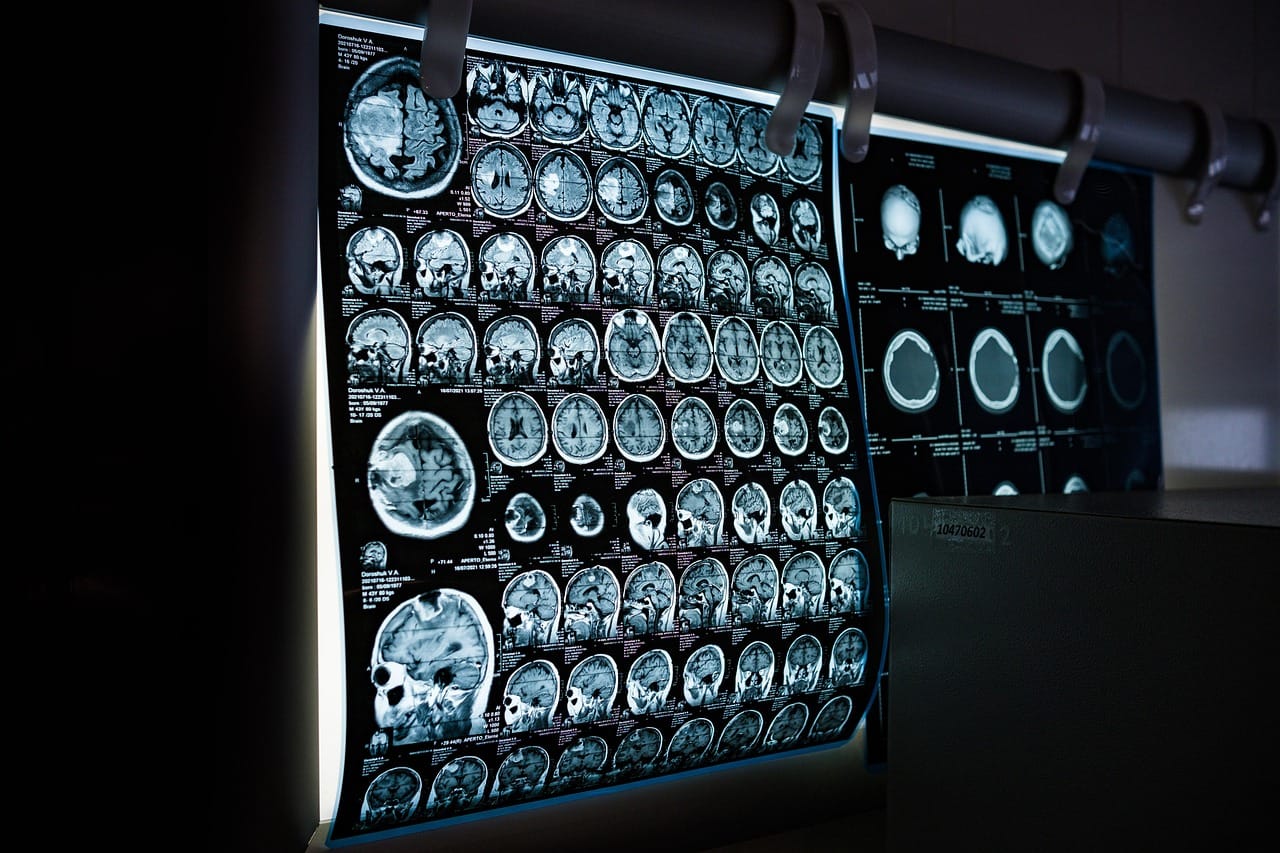
A 3 Tesla MRI uses a magnetic field twice as strong as the more common 1.5 Tesla scanner, which can mean sharper images, faster scans or both. It is not automatically better for everyone, though. This guide explains what the extra strength buys, where it matters most and when a 1.5T scanner is the wiser choice.
| 1.5 Tesla MRI | 3 Tesla MRI | |
|---|---|---|
| Field strength | Standard in most hospitals | Twice as strong |
| Image detail | Clear and reliable | Finer detail, especially of small structures |
| Scan time | Standard | Often shorter for the same detail |
| Noise | Loud | Usually louder |
| Metal implants | Suitable for more implants and devices | More implants need checking first |
| Strongest at | General imaging, patients with implants | Brain, nerves, prostate, joints, blood vessels |
What does 3 Tesla mean?
The tesla is the unit used to measure the strength of a magnetic field. A 3 Tesla scanner is roughly 60,000 times stronger than the Earth's own magnetic field, and twice as strong as a 1.5T scanner.
That matters because a stronger field produces a stronger signal from the body. In practice, radiographers can use that extra signal in two ways: to capture finer detail, or to complete a scan more quickly without losing quality. As a result, the same scan can be sharper, shorter or a balance of both.
Where 3 Tesla MRI makes the biggest difference
The extra detail is most valuable where structures are small or subtle changes matter.
| Area | Why 3T helps |
|---|---|
| Brain and nerves | Shows small lesions and fine anatomy more clearly. |
| Prostate | Gives sharper detail for prostate cancer assessment. |
| Joints | Makes cartilage, ligaments and small tears easier to see. |
| Blood vessels | Produces clearer images of the arteries without X-rays. |
When a 1.5T scanner is the better choice
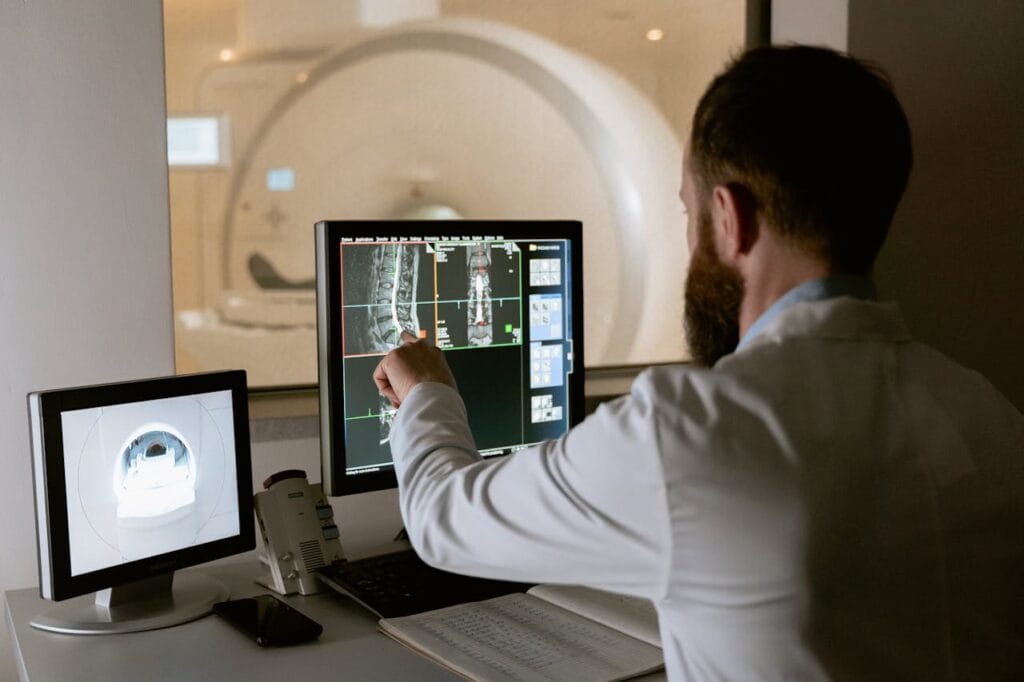
A stronger magnet is not always an advantage. In particular, metal distorts MRI images more at 3T, and the higher energy involved means some implants and devices are only approved for scanning at 1.5T.
- A pacemaker or other implanted device
- Metal joint replacements, plates or screws near the area being scanned
- Some older implants of unknown type
- Strong sensitivity to noise, as 3T scanners are usually louder
Your radiographer will always check your implants before any MRI. If you have one, tell the clinic when you book.
Is 3 Tesla MRI best for a full body check?
For a preventive check, 3T brings genuine advantages in the brain, prostate and joints. However, three things matter at least as much as field strength: which areas are scanned, who reads the images and how any finding is followed up. MRI also shows the lungs less clearly than CT, which is why thorough assessments often combine both. Our guides to CT scan vs MRI and full body cancer scans explain how the scans work together.
Comfort matters too. Standard scanners have an opening of around 60cm, while wide-bore scanners open to 70cm or more, which many people with claustrophobia find far easier.
Questions to ask before booking an MRI
- What is the field strength?Ask whether the scanner is 1.5T or 3T, and why that suits the area being scanned.
- How wide is the opening?A wide-bore scanner makes a real difference if you dislike enclosed spaces.
- Which areas are included?"Full body" means different things at different clinics, so ask for the list.
- Who reports the images?A consultant radiologist with experience in the area scanned is ideal.
Common questions
What is a 3 Tesla MRI?
It is an MRI scanner with a magnetic field strength of 3 tesla, twice that of the more common 1.5T scanner. The stronger field can produce sharper images or shorter scans.
Is 3T MRI better than 1.5T?
For the brain, prostate, joints and blood vessels, 3T often gives finer detail. For people with certain metal implants, however, 1.5T may be safer and produce clearer images.
Is a 3 Tesla MRI safe?
Yes. MRI uses no radiation. The main safety question is metal in the body, so you will be asked about implants and devices before any scan.
Is a 3T MRI louder?
Usually, yes. You will be given ear protection, and some scanners also offer music or video to help you relax.
How long does a 3T MRI take?
It depends on the area scanned. Most MRI scans take between 20 and 60 minutes, and a 3T scanner can sometimes shorten that.
Can I have a 3T MRI with a hip replacement?
Often, yes, but it depends on the implant and the area being scanned. Tell the clinic when you book, so they can check it is suitable.
Imaging at the highest standard
Ultra-wide-bore 3 Tesla MRI, with a 75cm opening. Assessments from just £3,000, all-inclusive.
MRI scans in our programmes, including a prostate MRI for men and brain and artery MRI in Platinum, take place on an ultra-wide-bore 3T scanner at the NABH-accredited BAPS YM Hospital in India, with every result explained face to face by senior specialists. Your five-star hotel and private chauffeur are included, so you only arrange your flight.
Sources: NHS guidance on MRI scans and the MRI procedure. This article is general information, not medical advice.