A new trial in at least 200 GP practices in England will test whether a single blood sample can help spot 13 types of cancer earlier. It arrives weeks after the largest study of a multi-cancer blood test, the 142,000-person NHS-Galleri trial, missed its main goal while still showing real promise. Here is what both mean for you, how accurate these tests are, and what one costs privately in the UK today.
The short answer
1 in 100
People screened who got a positive result in the NHS-Galleri trial each year
About half
Of those positive results that turned out to be cancer
£800 to £1,300
Typical private price of the Galleri test in the UK
A multi-cancer blood test can add to, but not replace, national screening. A negative result does not rule cancer out, and anyone with symptoms should see their GP rather than wait for a test.
What is the new NHS blood test trial for 13 cancers?
The trial, called STRIDE-RCT and led by the University of Birmingham, was announced on 4 November 2026. More than 20,000 patients across at least 200 GP practices in England will take part, in inner cities, rural areas, seaside towns and deprived communities. It is funded through the National Institute for Health and Care Research with up to £8.49 million from the Office for Life Sciences, and the government describes it as a world first in primary care.
It is aimed at a specific group: people aged 45 and over who see their GP with abdominal symptoms such as persistent bloating or discomfort. These symptoms are common, vague and usually harmless, which is exactly why cancers behind them are so easily missed. Only 2 to 6% of urgent cancer referrals currently lead to a cancer diagnosis, so GPs need better ways to tell who needs investigating first.
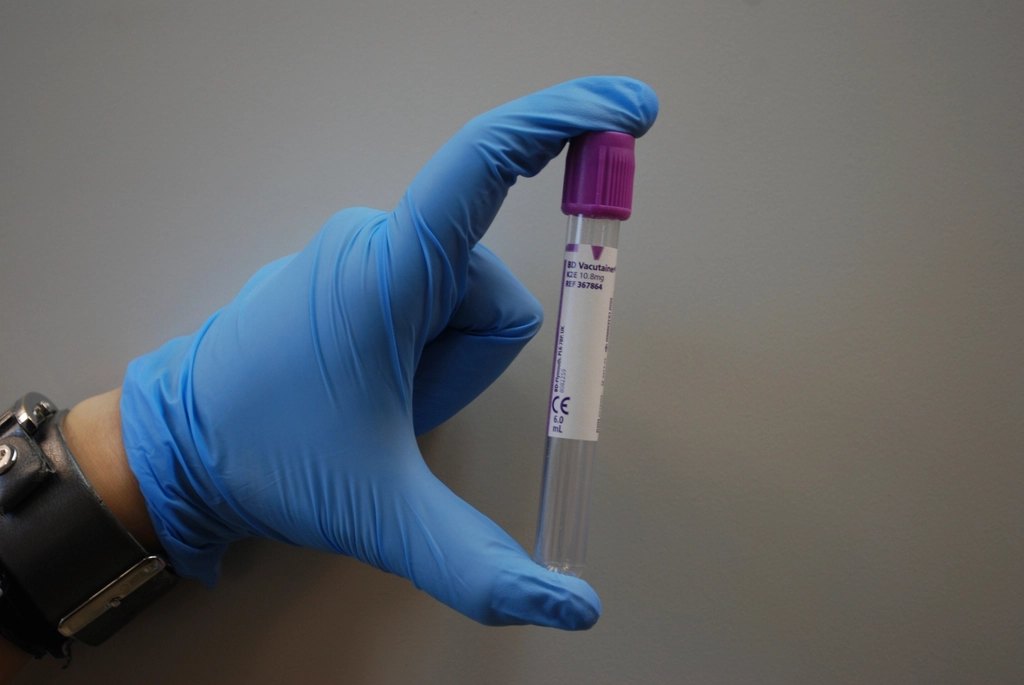
Taking part usually means giving one or two extra tubes of blood alongside routine tests at the practice. The tests look for signs of 13 cancers in that single sample and suggest where in the body a cancer may be:
Digestive
Bowel, small bowel, stomach and oesophagus (gullet).
Liver and pancreas
Pancreas, liver, bile duct and gallbladder.
Women's health
Ovary and endometrium (the womb lining).
Urinary and prostate
Kidney, bladder and prostate.
A positive result is not a diagnosis. It helps the GP and patient decide whether an urgent referral is needed. The trial will measure how well the tests work alongside a GP's own judgement before any decision on using them across the NHS. No date has been given for results.
Why the stakes are high: around 71,000 people in England are diagnosed with pancreatic, stomach, liver, ovarian or bowel cancer each year, and nearly 35,000 die from them. Around 9 in 10 people diagnosed with bowel cancer at stage 1 survive at least five years, compared with about 1 in 10 at stage 4. Finding cancers earlier is a central aim of the government's National Cancer Plan.
The cost of a late diagnosis has a familiar face. The campaigner Dame Deborah James learned she had bowel cancer too late for effective treatment and died in 2022. Her father, Alistair, told the BBC the trial could be "a great step forward", though she would have been too young to qualify for it.
How does a multi-cancer blood test work?
Tumours shed tiny fragments of their DNA, and other substances, into the bloodstream. A multi-cancer early detection test, sometimes called an MCED test or a liquid biopsy, analyses a blood sample for these traces. If it finds a cancer signal, it also predicts which organ the signal most likely came from, so doctors know where to look.
The best-known test, Galleri, made by the American company GRAIL, reads chemical tags on that DNA (known as methylation patterns) that differ between cancer and healthy cells, and between one organ and another. The tests in the new trial combine several technologies: detecting DNA shed by tumours, measuring proteins in the blood and using artificial intelligence to analyse the results.
The term liquid biopsy is also used in UK hospitals for something else: testing the blood of people already diagnosed with cancer to choose treatment or check whether it has returned. That is a different use from screening people who feel well, and it is why searches for liquid biopsy often lead to hospital genomics pages.
What happens after a multi-cancer blood test
Then one of two results
Reassuring, but not an all-clear: many cancers, especially early ones, are missed.
Next: keep up routine screening and report new symptoms.
The report names the likely organ. In the NHS-Galleri trial, around half were cancer.
Next: scans and specialist tests, the only way to diagnose.
What did the NHS-Galleri trial find?
The NHS-Galleri trial is the biggest test so far of whether screening healthy people with a multi-cancer blood test saves them from late diagnosis. It enrolled 142,250 people in England aged 50 to 77, who were randomly split into two groups. One group gave blood for the Galleri test once a year for three years alongside usual care; the other had usual care alone. The full results were published on 23 September 2026 in the New England Journal of Medicine and Nature Medicine.
No significant fall in stage 3 and 4 cancers combined, across 12 cancer types chosen in advance.
Stage 4 diagnoses were 14% lower in the screened group, with the gap widening in years two and three.
There were 16% more stage 1 and 2 diagnoses of those 12 cancers in the screened group.
Fewer cancers in the screened group were first found in an emergency, such as on a visit to A&E.
Fewer than 1 in 200 tests gave a positive result in someone who did not have cancer.
When cancer was found, the test's top two predicted sites were right in more than 90% of cases.
The researchers stress that longer follow-up is needed to show whether catching cancers earlier leads to fewer deaths. The trial was funded by GRAIL, with the main analysis carried out by statisticians at Queen Mary University of London. The NHS has not decided whether to offer the test and will review the evidence. In short, the test shows promise, but it is not yet proven to save lives.
How accurate are multi-cancer blood tests?
Accuracy has two sides, and these tests perform very differently on each.
When it says cancer
- About 1 in 100 people screened each year got a positive result in the NHS-Galleri trial.
- Between 46% and 58% of positive results were confirmed as cancer, depending on the year.
- That compares with about 6% for urgent referrals for suspected cancer, and 26% for a positive breast screening result in England.
When it says all clear
- Across all cancer types, the test detected only around a third of the cancers diagnosed in the screened group.
- For the 12 more deadly cancers it was designed around, it detected just over half.
- Early, small cancers are the hardest to detect, because they shed the least DNA into the blood.
So a positive result deserves fast follow-up, but a negative result should never stop you acting on symptoms. People with symptoms are also a different group from healthy people being screened: in an earlier study of patients referred with symptoms, called SYMPLIFY, about a quarter of positive results were false alarms. That is one reason the new trial is testing blood tests alongside GPs' judgement rather than in place of it.
Is a multi-cancer blood test available on the NHS?
Not routinely. The Galleri test is not approved for routine NHS use, and the NHS-Galleri trial has closed to recruitment. The new STRIDE trial is offered by participating GP practices to eligible patients, so you cannot sign up to it yourself. If you are 45 or over, have persistent abdominal symptoms and your practice is taking part, your GP may offer it.
The NHS cancer screening programmes for bowel, breast and cervical cancer, and lung checks for eligible current and former smokers, remain the proven route. Take up every invitation you receive, whatever other tests you choose.
Can you get a multi-cancer blood test privately in the UK, and what does it cost?
Yes. Galleri is the main multi-cancer blood test sold privately in the UK. Prices checked in November 2026 typically run from around £800 to £1,300. One national clinic chain charges £1,299, which includes a clinician consultation, the laboratory analysis, a results review and aftercare if a signal is found, with home sampling slightly more. Results usually take two to three weeks.
Private providers generally offer it to adults at higher risk of cancer, typically those aged 50 or over, and not to people who are pregnant, aged 21 or under, or in active cancer treatment. Before paying, ask exactly what happens if your result is positive: who arranges the scans, how quickly, and whether those costs are included.
Single tumour-marker blood tests, such as PSA for the prostate or CA-125 for the ovaries, cost far less, usually £29 to £59 each, with panels around £159 to £299. But they are a different tool. They were designed to monitor known cancers or investigate symptoms, and on their own they are not reliable screening tests for people who feel well. Read more about what tumour markers can and cannot show.
Galleri test
£800 to £1,300
Looks for a signal from more than 50 cancer types at once.
Single tumour marker
£29 to £59
One marker linked to one organ, best read with a doctor.
Tumour-marker panel
£159 to £299
Several markers together, still not a screening test alone.
Prices are drawn from UK private provider websites and independent UK price comparisons, checked November 2026. Prices change, so confirm before booking.
Blood test, scan or screening: which finds cancer earlier?
Each tool sees cancer in a different way, which is why they work best together rather than as substitutes.
| Approach | What it looks for | Main strength | Main limitation |
|---|---|---|---|
| Multi-cancer blood test | Traces of tumour DNA or proteins in the blood | Covers many cancers, including several with no screening programme | Misses many early cancers; not yet proven to save lives |
| Tumour markers | Single substances linked to particular cancers | Cheap and useful alongside symptoms or other tests | Raised by harmless conditions; unreliable alone |
| Imaging (MRI, CT, ultrasound) | Visible changes in organs and tissues | Shows exactly where and how large a change is | Can find harmless findings that need follow-up |
| NHS screening programmes | Bowel, breast and cervical cancer, and lung cancer in smokers | Proven to reduce deaths | Only covers a handful of cancers |
For a closer look at imaging, see what a full body cancer scan can find and the difference between CT and MRI.
Who should consider a multi-cancer blood test, and who should not?

It may suit you if
- You are 50 or over, or have a raised risk of cancer through family history or smoking.
- You already keep up with your NHS screening and want to add to it.
- You understand a negative result is not an all-clear.
- You can arrange, or afford, fast follow-up scans if a signal is found.
Think again if
- You have symptoms now: see your GP instead of waiting for a test.
- You are under 50 with no particular risk factors.
- You would find an uncertain or false-positive result very distressing.
- You would use it in place of bowel, breast or cervical screening.
Symptoms you should not wait on
No blood test should delay a GP appointment. Book one if you notice any of these, especially if they last three weeks or more:
- Bloating or tummy discomfort that will not go away, the symptoms the new trial focuses on
- A change in your bowel habits, or blood in your poo or pee
- Weight loss you cannot explain
- Difficulty swallowing, or food sticking
- Yellowing of your skin or the whites of your eyes
- Bleeding after the menopause
Our clients also ask
How much does a liquid biopsy cost in the UK?
A private multi-cancer liquid biopsy, such as the Galleri test, typically costs around £800 to £1,300 in the UK, depending on the provider and what follow-up is included. Liquid biopsies used to guide treatment for people already diagnosed with cancer are a different test, usually arranged by the cancer team.
Is a blood biopsy test the same as a liquid biopsy?
Yes. Blood biopsy and liquid biopsy both describe testing a blood sample for traces of cancer instead of taking tissue. A screening version for people without symptoms costs around £800 to £1,300 privately. A diagnosis of cancer still needs scans and, usually, a tissue biopsy.
Can a blood test detect cancer in the UK?
Some blood tests can pick up signs of cancer, but none can diagnose it on its own. Multi-cancer tests look for a signal from many cancers at once, and tumour markers look for single substances. Both can miss cancers and give false alarms, so results always need a doctor's interpretation and further tests.
Which cancers can a multi-cancer blood test detect?
It depends on the test. Galleri looks for a signal from more than 50 cancer types. The tests in the new STRIDE trial focus on 13 cancers, including bowel, stomach, pancreatic, liver, ovarian, kidney, bladder and prostate cancer. No test finds every cancer, and early-stage cancers are the hardest to detect.
Is the Galleri test available on the NHS?
No. It is not approved for routine NHS use. It was offered only within the NHS-Galleri trial, which has closed to recruitment. The NHS is reviewing the trial's results, published in September 2026, and has not made a decision.
Is the Galleri test worth it?
It depends on your risk and expectations. In the NHS-Galleri trial, about half of positive results were cancer and stage 4 diagnoses fell by 14%, but the test detected only around a third of all cancers and the trial missed its main goal. It is best seen as an addition to NHS screening for people at higher risk, not a replacement.
Does a negative result mean I do not have cancer?
No. A negative result lowers the chance of certain cancers being present, but these tests miss many cancers, particularly early ones. Keep up your routine screening and see your GP about any symptoms.
Can I sign up for the STRIDE blood test trial?
Not directly. The trial is offered by participating GP practices in England to patients aged 45 and over who come in with abdominal symptoms such as persistent bloating or discomfort. If your practice is taking part, your GP may offer it.
When will multi-cancer blood tests be available on the NHS?
No date has been set. The NHS is weighing the NHS-Galleri results, and the STRIDE trial must first show how well its tests work in GP surgeries. Any wider rollout would depend on that evidence.
How long do multi-cancer blood test results take?
Privately, results usually take two to three weeks. If a signal is found, the provider should explain the result and arrange or advise on the scans needed to investigate it.
One blood test is a single clue
See the full picture in three days, from £3,000 all‑inclusive.
We take you from the UK to India for a thorough full body health check, where you'll be seen by 17 individual specialists. Your five-star hotel, private chauffeur and local sightseeing are all included.
Want the inside view? Book a no-obligation consultation for a clear insight into our preventive programmes: exactly what we do, what we offer and whether it is right for you.
Sources: BBC News, University of Birmingham and GOV.UK reports of the STRIDE-RCT trial (4 November 2026); NHS-Galleri trial results from Queen Mary University of London, the NHS-Galleri trial team and GRAIL (May and September 2026); Cancer Research UK; UK private provider prices checked November 2026. This article is for general information and is not medical advice.